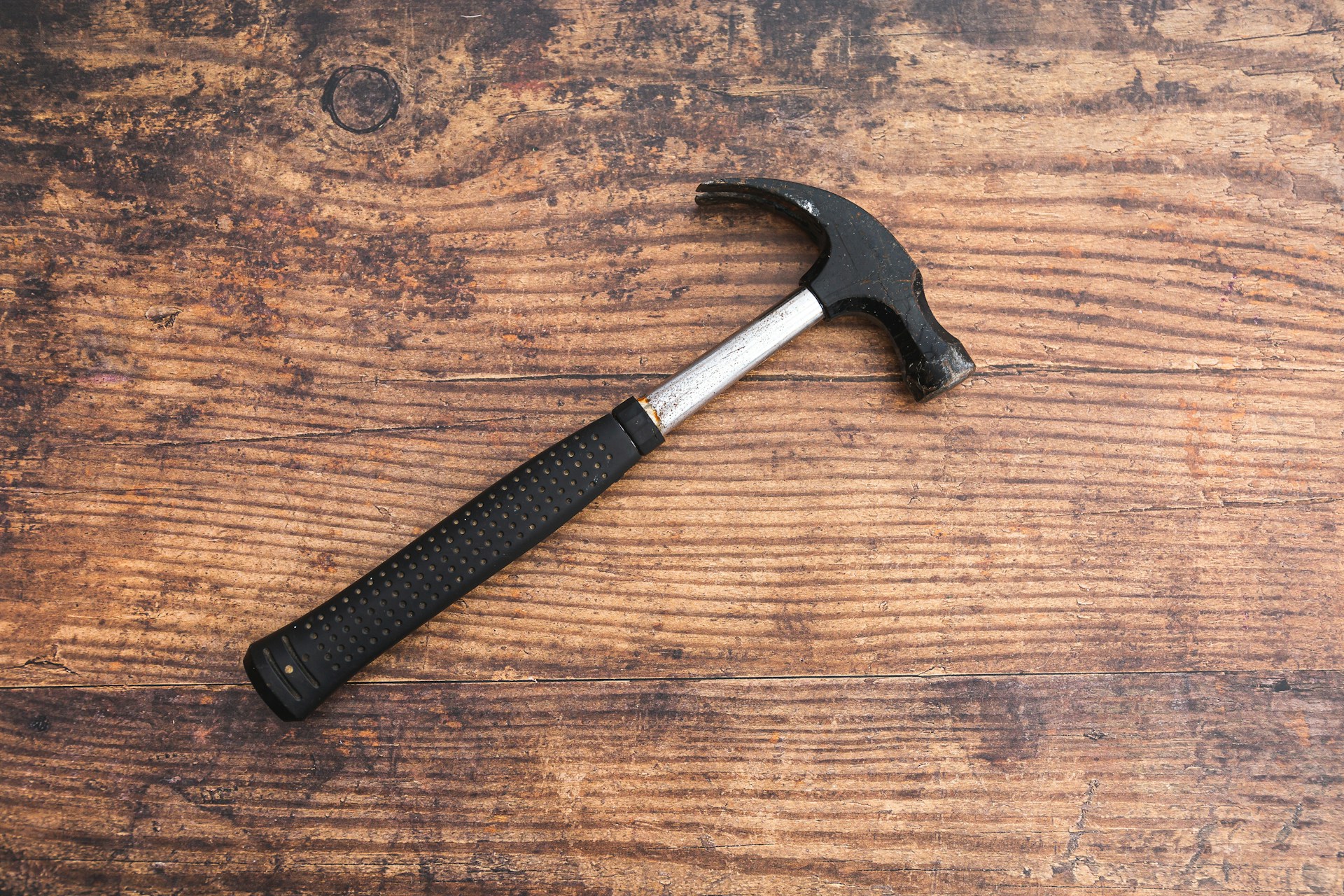
There’s a saying I love: When you’re a hammer, everything looks like a nail.
I’ve been thinking about how this applies to your greatest strengths. The qualities you’ve been praised for, rewarded for, and come to believe define who you are.
I keep noticing how sometimes your biggest strength can become your biggest limitation.
For much of my life, efficiency was one of my superpowers.
I could organize, optimize, streamline, and execute like nobody’s business. Give me a complicated project with too many moving parts, and I’d turn it into a beautifully orchestrated machine. Efficiency was rewarded throughout my career. It helped me accomplish more, solve complex problems, and navigate demanding environments. So naturally, I leaned into it.
And then I leaned into it some more.
Until eventually, efficiency wasn’t just something I used at work. It became the lens through which I approached almost everything.
I was optimizing my mornings, my errands, my conversations, my free time. Life became one giant logistics problem waiting to be solved.
Not everything in life is supposed to be efficient.
Some things are meant to take time. Conversations that wander without a destination. Meals that stretch into the afternoon. Sitting with someone you love without accomplishing a single thing.
Efficiency is about getting more done in less time. But presence asks us to stop measuring the value of a moment by what we accomplish in it, and time is the very thing needed for presence to exist. What’s the point of becoming incredibly efficient at living if you’re never actually present for your life?
I hadn’t realized that a strength, applied indiscriminately, could become a weakness.
The same thing happened with my intellect. For decades, I relied almost exclusively on my analytical mind to navigate life. I could research, reason, anticipate, and problem-solve my way through almost anything.
I’d become so dependent on my intellect that I discounted the information coming from my body. My feelings, sensations, instincts, and intuition were treated like unreliable witnesses while my brain played judge and jury.
I wasn’t lacking intelligence. I was limiting the kinds of intelligence I allowed myself to access.
And here’s where I think things get especially interesting. A strength becomes particularly difficult to question when it becomes part of your identity. It’s no longer simply something you do well. It’s who you believe yourself to be.
I’m a problem solver.
Wonderful. Until every interaction becomes an opportunity to identify something that’s wrong and fix it. Sometimes someone doesn’t need a solution. They need to be heard, witnessed, and given the time and space to sort through feelings and figure out their next steps on their own. Sometimes there isn’t a problem at all.
I’m the easy child. The good one.
Beautiful. Until being easy becomes a lifelong commitment to making sure everyone else is comfortable. You become so skilled at anticipating what others want that you lose touch with what you want.
I’m the rock of the family.
Admirable. Until being solid means there’s no room for your own storms. Your sadness, fear, and anger have nowhere to go because rocks aren’t supposed to crumble.
Except we’re not rocks. We’re human beings.
And feelings that aren’t given space don’t simply disappear. They build pressure beneath the surface until, eventually, even the rock cracks in unexpected ways.
What’s fascinating is that none of these strengths are inherently bad. Efficiency, intellect, agreeability, reliability, they’re all wonderful qualities.
The problem isn’t the strength. It’s the absence of choice about when to use it. Somewhere along the way, a tool becomes a reflex. We stop asking whether it’s appropriate for the situation because it’s worked so well for us in the past.
And perhaps even more subtly, we become attached to being the kind of person who possesses that strength. If I’m not the efficient one, who am I? If I’m not the problem solver, what value do I bring? If I’m not the strong one, will people still be able to depend on me?
Suddenly, setting down the hammer feels like setting down a piece of ourselves.
But what if we don’t have to abandon our strengths to grow beyond them?
What if the work is simply expanding our toolbox?
I’m learning that efficiency is wonderful when I’m organizing a project, but terrible when I’m trying to savor a moment. My intellect is invaluable when evaluating a complicated decision, but incomplete when I ignore what my body knows.
A strength becomes a limitation when it’s the only way we know how to show up.
So I’ve started asking myself a different question. Not, What am I good at? But, Is what I’m good at right for this moment?
Because the goal isn’t to become less capable. It’s to become more free. Free to solve a problem or simply listen. To be strong or fall apart. To move quickly or linger. To pick up the hammer when there’s a nail. And put it down when there’s a sunset.
P.S. Sometimes the strengths that got us where we are become the very things keeping us stuck. Through my coaching, I help people recognize how to stop using the hammer for everything and start enjoying the sunset.